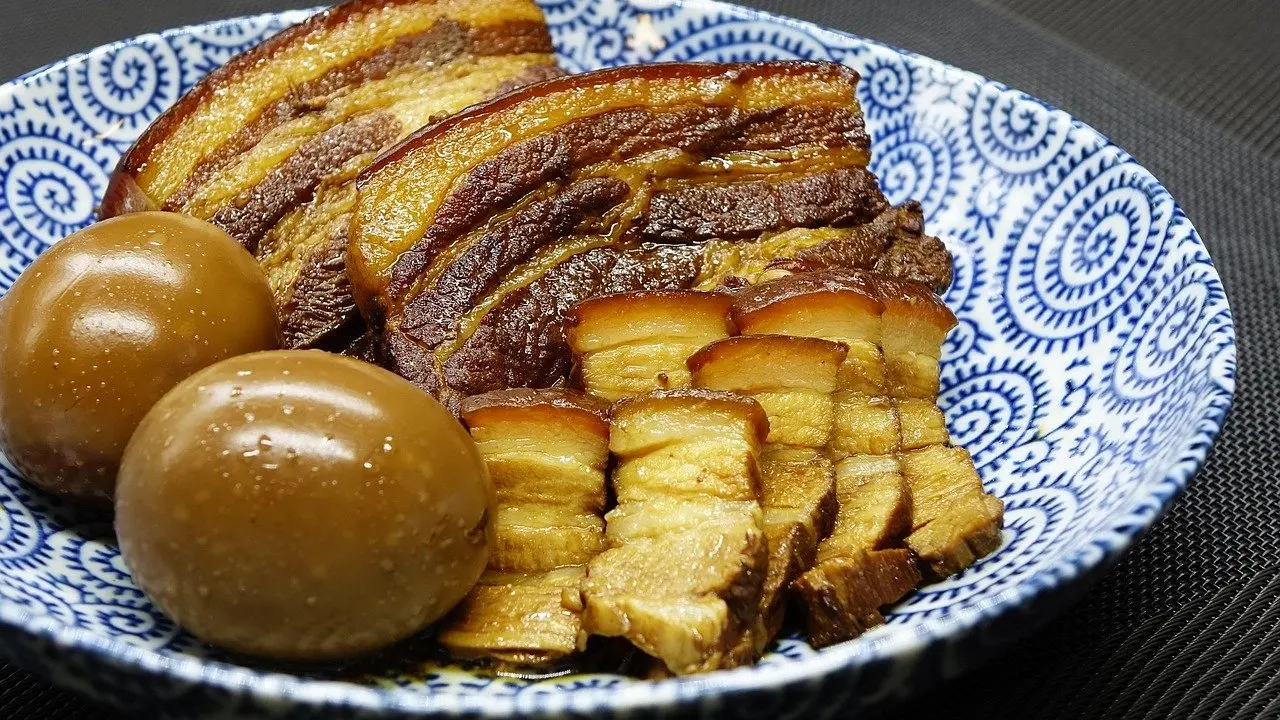
This chashu pork recipe rolls and ties pork belly, then braises it in soy sauce, sake and mirin: about 1½–2 hours barely simmering on the stovetop, or about 4 hours at 275 F in the oven.
The stovetop suits an afternoon when you want the pork done sooner. The oven suits a longer, slower afternoon when you can turn the roll regularly. For the wider technique behind Japanese home cooking, see our japanese cooking basics guide.
Before you start
Chashu is the Japanese braised cousin of Cantonese char sui, and the braise is what makes it tender and sliceable. The outcome to aim for is pork that a skewer slides through with little resistance, sliced thin and glossy with its own liquid.
- Pork cut. Pork belly can be rolled or flat and poached low and slow. Pork shoulder also works because it is fatty and rich in connective tissue. Pressure-cooked chashu is not recommended with pork loin, which overcooks.
- Kitchen twine. Butcher twine holds the rolled belly in a log. Cut a generous length so you can tie several snug loops.
- Braising ingredients. You need soy sauce, sake and mirin, plus ginger for aroma. A light soy sauce is the better choice because, as one recipe puts it, it has a good balance of salt without being too rich.
- Time. The marinade rests at least 3 hours at room temperature, or overnight in the fridge. The braise itself is slow, since traditional chashu is cooked for hours.
- Cookware. Use a heavy pot that holds the roll snugly for searing and stovetop braising, or a roasting tray for the oven version.
Step-by-step chashu method
Step 1: Choose and prepare the pork
Start with skin-on pork belly if you can. The oven braising ratio below is written for a 2½–3 lb skin-on belly, so use that as your size reference when you scale the liquid. If belly is unavailable, shoulder is the next best choice, since its fat and connective tissue break down in a long braise. Skip lean cuts, which dry out where fatty ones stay tender.
Step 2: Roll and tie the belly
Lay the belly flat, roll it into a log and tie it with butcher twine. Tie snugly at even spaces along the whole length. Loose twine lets the roll sag open and cook unevenly.
Checkpoint: lift the roll by the twine. If it holds its round shape without slipping, it is ready. A flat belly is a valid alternative, but a rolled one gives the round slices that sit neatly on a bowl of ramen.
Step 3: Sear the pork
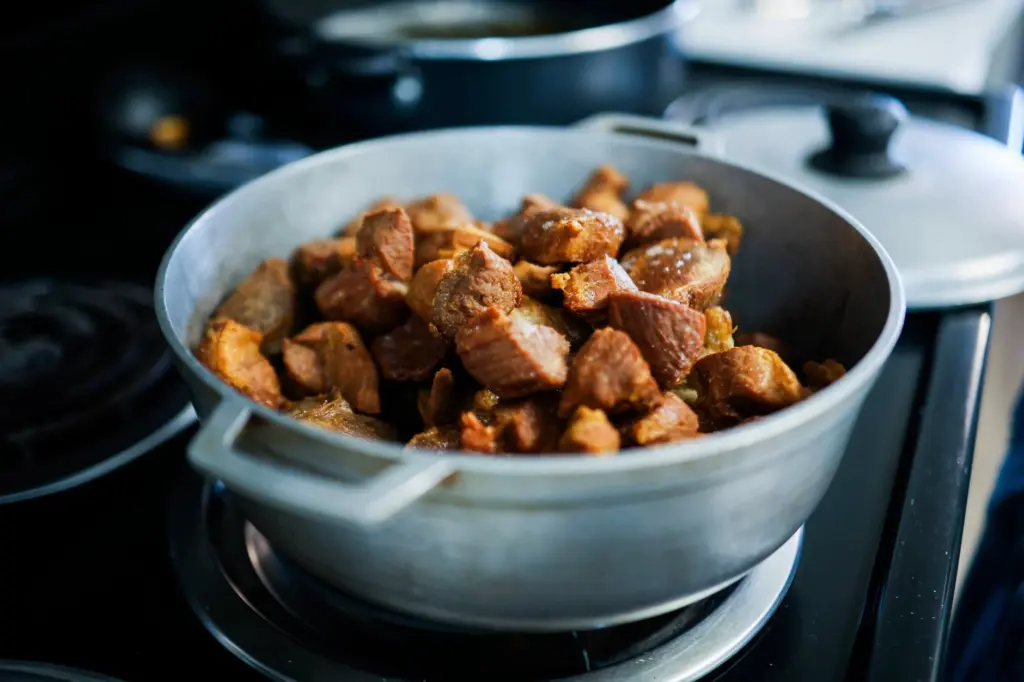
Brown the roll on all sides in a heavy pot over medium heat before any liquid goes in. Searing gives colour and a roasted edge that a pure simmer lacks. Even the quick shortcut version of chashu starts with seared pork belly. Move on once the surface is evenly browned rather than pale in patches.
Step 4: Mix the braising liquid and marinate
A good chashu braising liquid balances salty soy sauce, dry sake and sweet mirin or sugar. Published ratios differ, so choose the one that matches your method and pot:
- Oven ratio. 2 cups soy sauce, 2 cups water and 1 cup sake for a skin-on belly. It is the most soy-forward option here, so reduce it before using it as a sauce.
- Gentle stovetop ratio. ¾ cup light soy sauce with ¼ cup sake and 3 tbsp sugar, with water added to suit your pot.
- Quick belly ratio. For thick-cut belly, 2 cups water, 4 tbsp soy sauce and 1 tbsp mirin with slices of ginger.
- Shoulder ratio. For a 3 lb shoulder roast, 1 cup soy sauce, ½ cup sake, ½ cup mirin, ½ cup water and ¼ cup brown sugar.
Mirin is a sweetened rice wine, so more mirin or sugar gives a rounder, glossier glaze, while more sake keeps the liquid drier. Let the pork sit in its liquid for at least 3 hours at room temperature, or overnight in the fridge, before you cook it.
Step 5: Braise on the stovetop
Bring the pot to a bare simmer, then keep it there. The stovetop method for rolled belly is to simmer gently, barely simmering, for 1½–2 hours until the pork is tender. Turn the heat down if the surface starts to bubble hard, because a rolling boil toughens the outside before the centre softens.
Checkpoint: the pork is ready when a skewer meets little resistance at the thickest point. If it still grips the skewer, keep braising rather than cutting the time.
Step 6: Braise in the oven
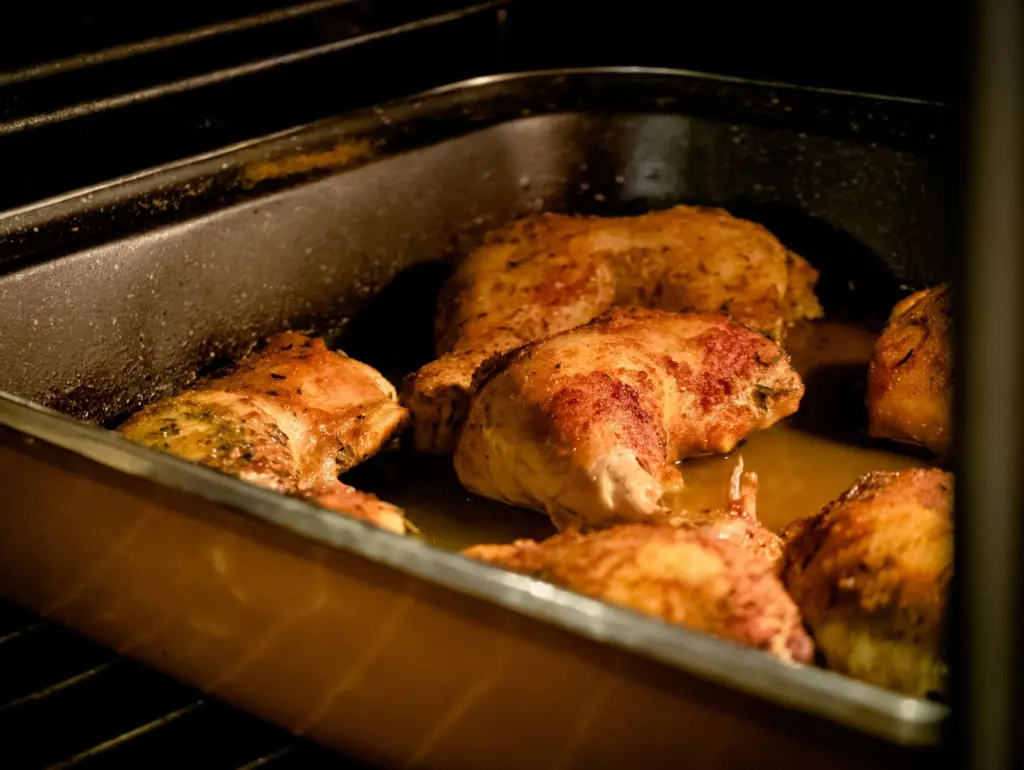
For oven chashu, set the oven to 275 F and braise for approximately 4 hours, turning the pork belly every 30–45 minutes. The oven takes longer than the stovetop and asks for more turning, but the low setting follows the same low-and-slow principle. The pork is done when a skewer can be inserted all the way through with little resistance.
Step 7: Rest, slice and store
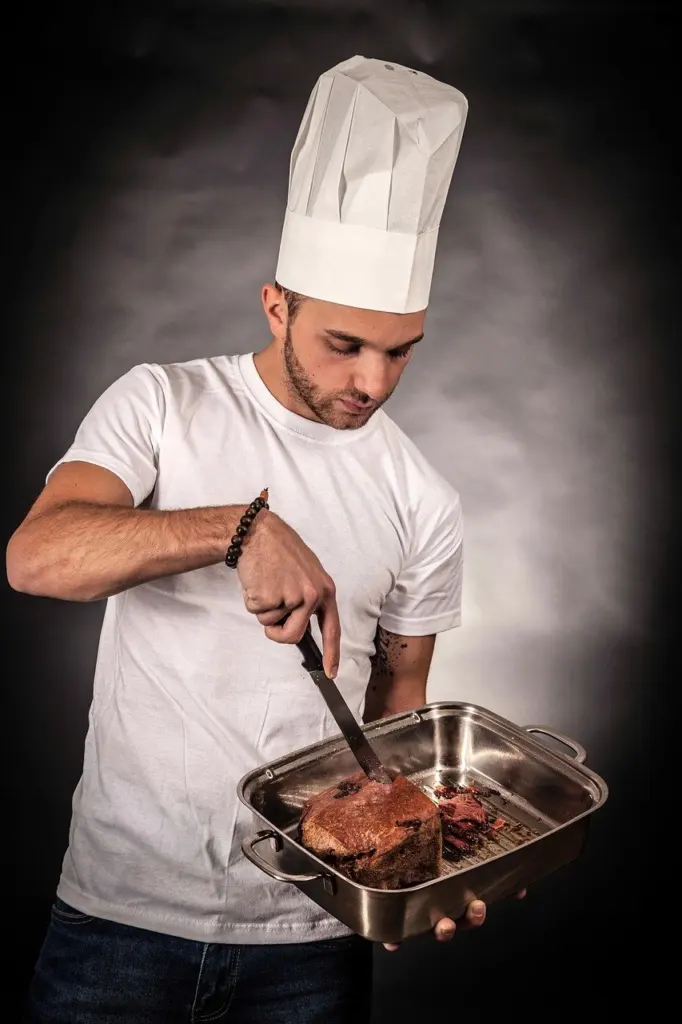
Let the cooked pork rest before slicing. One method chills it in a bag in the fridge for a few hours to a few days, then cuts it into ½-inch slices. To serve, sear each slice over medium heat for about 2 minutes per side, just until browned.
For storage, keep the pork in its cooking liquid for up to a week in the fridge. The liquid keeps the meat moist and doubles as a flavouring for later.
Stovetop and oven side by side
Both methods give tender chashu. They differ in the time they ask for and how much attention they need.
| Check | Stovetop | Oven |
|---|---|---|
| Heat | Barely simmering | 275 F |
| Time | 1½–2 hours | About 4 hours |
| Attention | Watch that the liquid stays at a bare simmer | Turn the pork every 30–45 minutes |
| Doneness | Pork is tender | Skewer goes through with little resistance |
Figures come from a stovetop chashu recipe and an oven chashu recipe.
Choose the stovetop when you want the shorter cook and can stay nearby to keep the heat low. Choose the oven when you would rather set a steady temperature and check in at intervals. Either way, use the skewer test rather than the clock alone, because the size of your roll changes the time.
Reusing the braising liquid in ramen
Do not discard the liquid. Strain it, then simmer it for 15 minutes to reduce and intensify its flavour. The reduced liquid is concentrated, so taste it before it goes into a bowl and add it by the spoonful.
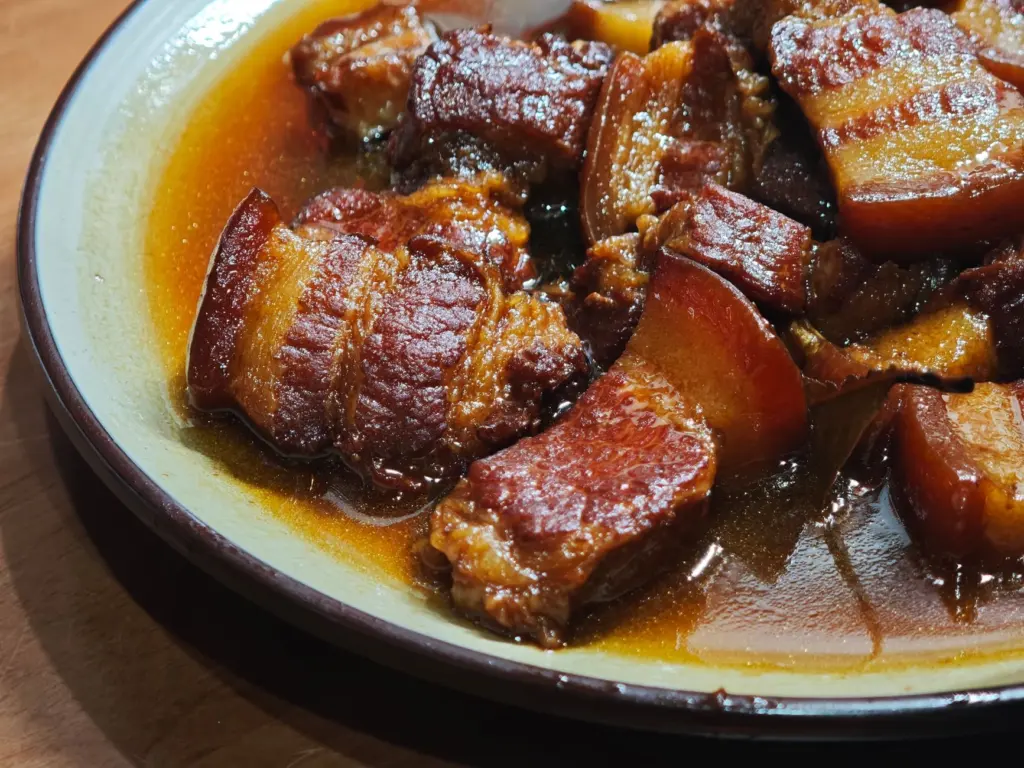
Spoon a little over sliced chashu to glaze it, or use it to season a bowl of ramen. Add a ramen egg recipe such as ramen egg recipe for the soft-boiled topping, and finish the bowl with a ramen aroma oil.
Frequently asked questions
What is chashu, and how does it differ from char siu?
Chashu is the Japanese braised version of Cantonese char sui. Its Japanese cousin is braised, which is why the method here is a gentle simmer or slow oven braise.
Can I substitute sake or mirin?
Yes. According to one shoulder chashu recipe, dry sherry, dry vermouth or dry white wine can replace sake. Sake or dry sherry plus 1 tbsp sugar can replace mirin.
Is there a faster way to make chashu?
Yes, with a pressure cooker and pork shoulder. The recipe uses 50 minutes at high pressure in an Instant Pot, or 40 minutes in a stovetop pressure cooker, followed by about 20 minutes of natural release. Cutting the roast into two pieces about 3x3x4 inches brings the total under an hour. A shortcut belly version simmers seared thick-cut belly for 13 minutes on low heat to 165 degrees F internal temperature. It is quick but less tender than a long braise.
Can I freeze chashu?
Yes. Freeze the cooked pork in its poaching liquid for 3+ months. Keeping it in the liquid protects the meat and saves the braising liquid for later.