| Symptom | First action | Planning use |
|---|---|---|
| Cloudy stock | Lower the heat and take the kombu out before the water boils. | Kelp’s soluble fibre clouds stock when the heat runs high, so keep the burner gentle from the start. |
| Slimy texture | Cap any cold soak at 8 hours. | Longer soaks pull out polysaccharides, so set a timer when you soak ahead. |
| Bitter or muddy stock | Shorten the katsuobushi steep and strain promptly. | Flakes left too long dissolve into the stock, so this step is the one to watch. |
| Weak savour | Weigh the kombu and katsuobushi against your water volume. | Recipes use different ratios, so pick one set of weights and adjust from there. |
The causes and limits above follow America’s Test Kitchen’s dashi guide and a Yahoo Malaysia feature on golden dashi stock.
To make dashi, follow the 10 g kombu to 15 g katsuobushi per 1 litre ratio: heat the kombu in water until small bubbles appear, remove it, steep the flakes for a few minutes, then strain.
This recipe is part of our japanese cooking basics collection. If terms such as katsuobushi or ichiban are new to you, the japanese cooking terms glossary explains them.
Ingredients and ratios
Dashi needs only three things: dried kombu, katsuobushi (dried bonito flakes) and water. Published ratios differ, so choose one set of weights and stay with it. Weighing beats eyeballing, because kombu sheets vary in size and flakes vary in volume.
- Lighter metric ratio: Yahoo Malaysia’s ichiban dashi uses 10 g kombu (approximately a 10 cm2 piece) and 15 g katsuobushi per 1 litre of water.
- Stronger bonito character: Kitchen Nippon uses one 10 cm square piece of kombu and 30 g shaved katsuobushi per 1 liter of water.
- Cups and ounces: America’s Test Kitchen notes that 1 oz each of kombu and katsuobushi per 4 cups of finished broth is common.
- Chef’s batch: Chef Morimoto’s recipe uses 1/2 oz kombu, 8 cups water and 1 1/2 oz bonito flakes, and makes 7 cups. He prefers filtered or spring water.
Kombu stays relatively modest across these recipes, while the katsuobushi amount varies much more. Start with the lighter metric ratio for a clean everyday stock. Move toward 30 g of katsuobushi per litre when you want a more pronounced bonito character.
The timed stovetop method
This sequence combines the recipes above into one routine for a home cook. Each step has a checkpoint, so you can tell it has worked without a thermometer.
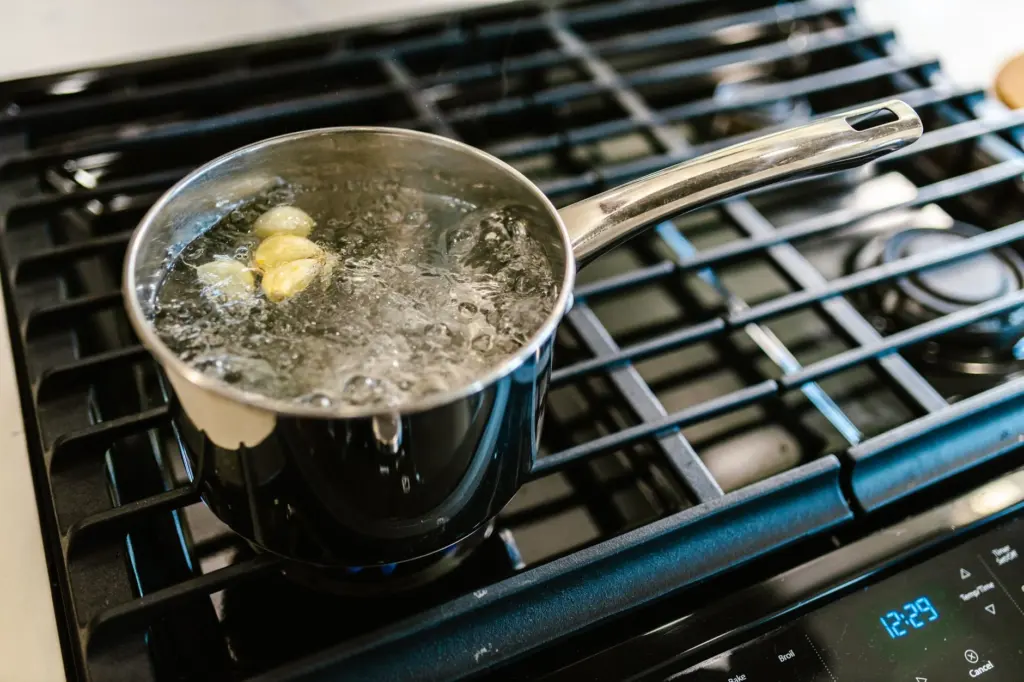
- Combine and soak. Put the weighed kombu in the pot with the cold water. Kitchen Nippon allows at least 30 minutes, while Otakufood prefers at least 2 hours, ideally overnight. Keep any soak within the 8-hour cap that America’s Test Kitchen gives.
- Heat the kombu gently. Warm the pot uncovered over medium heat. Morimoto heats it just until small bubbles break the surface, which takes 10 to 12 minutes.
- Remove the kombu. Lift it out as soon as those small bubbles appear. Do not let the water reach a hard boil.
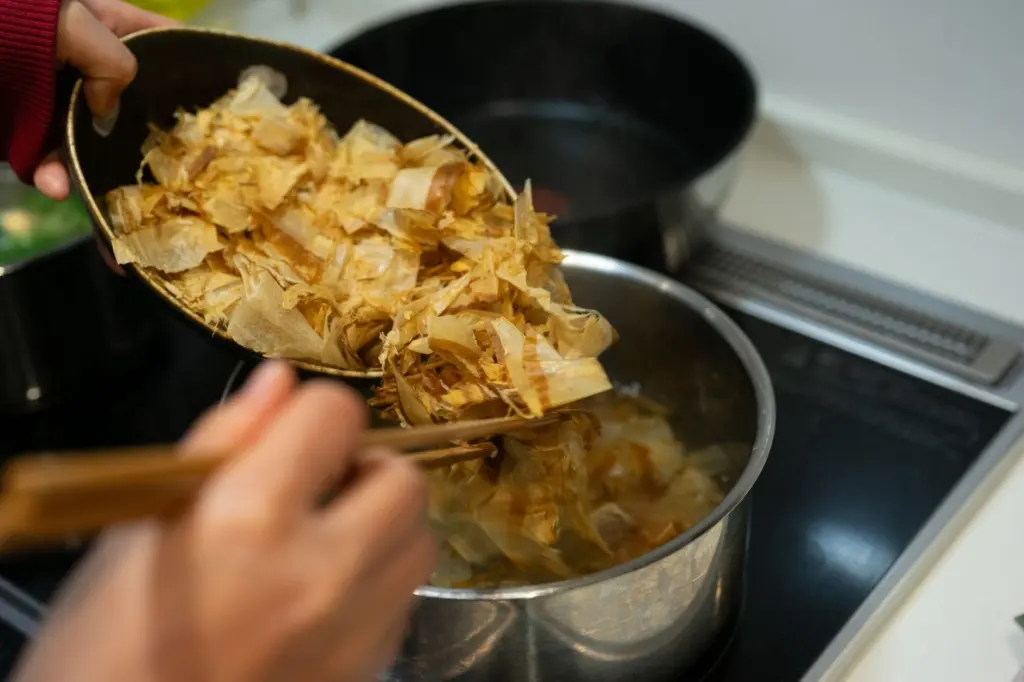
- Steep the katsuobushi. Add the flakes to the hot water. Let them steep about 1 minute, skim off the white froth with a spoon, then steep about 2 more minutes.
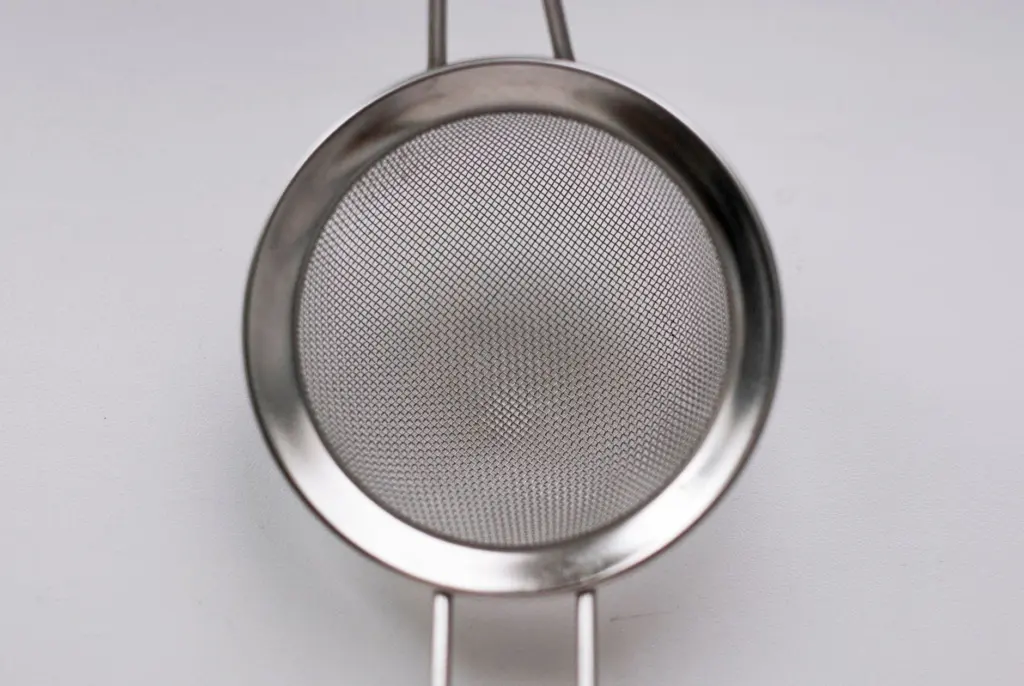
- Strain. Pour the stock through a fine mesh sieve into a bowl straight away, so the flakes stop releasing flavour.
Kombu: soaking, heat and the no-boil rule
Kombu should be warmed slowly and removed before boiling, because its job is to give up savour without giving up bitterness or cloudiness. Most problems with the stock trace back to this stage.
Cloudy stock
Cloudiness comes from the kelp’s soluble fibre. Yahoo Malaysia’s guide uses low heat for exactly this reason. Morimoto’s visual cue is a practical alternative to a thermometer.
- Fix now: turn the heat down and remove the kombu at the first small bubbles.
- Fix next time: use a larger pot, so the water heats evenly and the bubbles at the edge are easier to see.
Slimy stock
A slippery, thick feel points to over-soaking. America’s Test Kitchen says an 8-hour cap prevents the extraction of the polysaccharides behind it, and gives a cold-soak window of 1 to 8 hours. That makes an overnight soak convenient only if you remove the kombu in the morning.
Flat flavour
If the stock tastes thin, check the weights before blaming the technique. A longer cold soak also helps. The 30-minute minimum works for a quick pot, and the 2-hour soak that Otakufood recommends gives the kombu more time to release flavour before heating. Pick the short soak when you are cooking tonight and the longer one when you can plan ahead.
Katsuobushi: a short steep
Katsuobushi needs minutes, not a simmer. The timing is short because the thin shavings release flavour quickly and keep releasing it if left in the pot.
Bitter or muddy stock
Yahoo Malaysia warns that if the flakes simmer for too long, they can dissolve into the stock and make it bitter. The fix is to steep for the time given above and strain immediately. Morimoto’s version steeps for about 1 minute, skims, then waits 2 more minutes. America’s Test Kitchen describes a 3-minute steep in liquid at 200 degrees as drawing out rich, smooth savour. Both land in the same short window, so there is no reason to extend it.
Froth on the surface
White froth gathers as the flakes steep. Morimoto skims it off with a spoon after the first minute, before the remaining steep. Skimming costs a few seconds and keeps the surface clean before straining.
Why kombu and bonito pair: the umami compounds
Dashi tastes savoury because its two ingredients each supply a different umami compound. America’s Test Kitchen traces kombu’s deep savour to glutamate, an amino acid salt, and notes that Kikunae Ikeda named the flavour umami after identifying it. Glutamic acid is the acid form of that compound, and it is the reason kombu is the base of the stock.
Katsuobushi contributes through inosinate (inosinic acid). The same guide explains that simmering the bonito fillets during production multiplies their stores of available inosinate, one of the key substances behind katsuobushi’s umami depth. Producers vary in their process, so exact levels differ between brands. For the cook, the lesson is that you cannot make up for weak kombu by adding more flakes, or the reverse. Both ingredients need their own short, careful extraction.
The stock this method makes is ichiban dashi, the first extraction from fresh kombu and katsuobushi. It carries the clearest flavour of the stock you can get from these ingredients, so save it for dishes where the stock leads. When you season those dishes, the types of japanese soy sauce are worth knowing, because the seasoning interacts with the delicate base.
Straining and cooling
Strain through a fine mesh sieve into a clean bowl, and do not wait while the flakes sit in hot liquid. Then let the stock cool to room temperature before you refrigerate it. Cooling first keeps the stock from warming the fridge, and it matches the storage routine in Morimoto’s recipe.
Frequently asked questions
| Question | Answer |
|---|---|
| How long does homemade dashi keep in the refrigerator or freezer? | Morimoto’s recipe says to let the dashi cool to room temperature, then store it in the fridge for up to 4 days. Make batches that fit that window. |
| Can the leftover kombu and bonito be reused for a second dashi? | Yes. America’s Test Kitchen describes niban dashi from the spent ingredients. It tastes less robust than ichiban dashi and is best suited to stews and curries. |
| How much dashi does one batch make? | Morimoto’s recipe starts with 8 cups of water and makes 7 cups of finished dashi. |