The history of ramen starts with Chinese wheat noodles, not a Japanese invention. They reached Japan in the late 19th and early 20th centuries, shops and pushcarts followed in Tokyo, post-war hunger spread the bowl across the country, and instant noodles arrived in 1958.
If you have heard that ramen began with a feudal lord or with an instant-noodle company, both stories skip the real sequence. This timeline moves from port-city noodle soup to early Tokyo shops, post-war stalls, packaged noodles and regional styles. For the dishes themselves, see the ramen shop guide.
Where ramen came from: Chinese noodles in Japanese ports
Ramen came from China. Ramen Arashi traces Japanese ramen back to Chinese wheat noodles, which were brought to Japan during the late 19th and early 20th centuries. The dish that arrived was a noodle soup built on wheat noodles from the Chinese tradition, and the Japanese version was shaped by what happened to it after landing.
The route ran through trading ports. Tofugu’s history of ramen notes that port cities like Yokohama and Kobe attracted Chinese residents as well as Westerners, and that Chinese-style noodle soup took hold there. In the late 19th century, Yokohama’s version was known as Nankin soba, after Nanjing, the Chinese city the name points to. It used handmade noodles in a light chicken broth. Over time the Chinese-style noodles were also called shina soba, and later chuka soba. Tofugu says chuka soba became the most-used term after World War II, which is one reason the name you see on older menus may differ from the name used today.
Kansui and the texture of the noodle
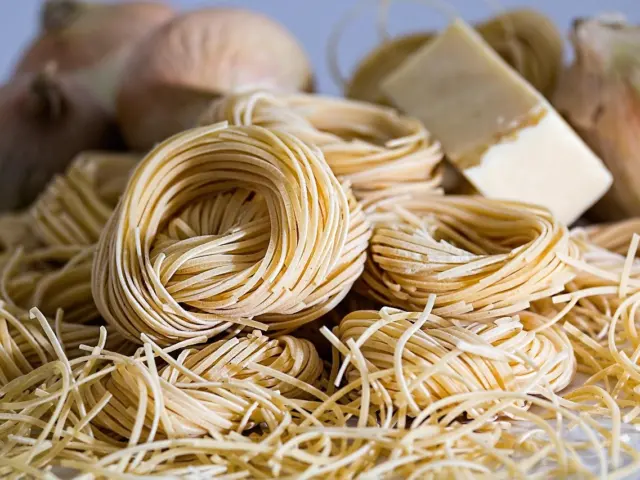
Kansui is an alkaline water, according to Eat2Explore. Yamato Noodle adds that hydration and kansui together affect a noodle’s elasticity. This is why the noodle, not only the broth, is part of ramen’s history. A bowl of Chinese-style wheat noodles became ramen partly through how the dough was made and how it behaved when boiled.
The feudal-lord legend
One popular story credits the legendary feudal lord Tokugawa Mitsukuni as the first person to eat ramen, in the 1660s. Tofugu traces this story to a 1987 book and states plainly that there is no direct historical connection to modern ramen. Treat it as folklore rather than as the origin of the dish. If a friend or menu repeats the story, the dated record starts later, in the port cities and the first Tokyo shops.
| Common belief | What the history shows | Why it matters |
|---|---|---|
| A feudal lord ate the first ramen | The 1660s Tokugawa story has no direct historical link to modern ramen. | Start the timeline with Chinese noodles, not the legend. |
| Ramen is a purely Japanese invention | Its origins trace to Chinese wheat noodles brought over in the late 19th and early 20th centuries. | Japanese ramen is an adaptation of an imported dish. |
| Ramen shops are a modern phenomenon | Rai-Rai Ken opened in Tokyo’s Asakusa district in 1910, and pushcart sellers worked in the early 20th century. | Shop and street-cart ramen predate packaged noodles. |
The claims in this table come from Tofugu and Ramen Arashi.
The first shops and street carts
The earliest dated ramen shop in this record is Rai-Rai Ken, which opened in the Asakusa district of Tokyo in 1910, per Tofugu. That is the marker to use when someone asks when ramen arrived in Japan’s cities as a shop food. Earlier port-city noodle soup existed, but a named shop with a date is the clearer starting point for a timeline.
Street selling came alongside it. Tofugu reports that the shop inspired Tokyo pushcart peddlers, who started selling noodle soup in the old Ueno and Asakusa neighborhoods early in the 20th century. A cart needed little more than a pot, a broth and a supply of noodles, which is why this format spread quickly in dense districts.

Production was changing too. A mechanical noodle-making machine was in general use by the late 1910s, according to Tofugu. Machines made it easier to produce noodles in quantity, which matters once the dish moved beyond a single kitchen. In this early period ramen was largely eaten in cafes (kissaten) and Western-style eateries, as well as at street stands.

- Fixed shops: Rai-Rai Ken in 1910 is the dated marker for a Tokyo noodle shop of this kind, and it is the anchor point for a shop-based history.
- Pushcarts: Street sellers in Ueno and Asakusa are the early form of the street-stall tradition that rāmen yatai later carried on in the post-war period.
- Cafes and Western eateries: These were where much ramen was eaten before it became its own kind of restaurant, so the dish was not yet a separate category of eating out.
Post-war hunger, black markets and wheat
Post-war Japan turned ramen from a niche urban dish into mass food. In that setting, food supply mattered more than menu creativity, and the street stall became a practical way to feed people.
These stalls are where the rāmen yatai tradition took hold as a feature of city life.
Ingredients mattered as much as venues. Because wheat was being imported from the US, many wheat-based foods became popular. Heavy with garlic and oil, these dishes were called stamina foods. Tofugu’s account shows how a grain supply shaped which foods a crowded, hungry city could cook and sell.
Yamato Noodle summarizes the result: following World War II, ramen quickly spread throughout Japan as an affordable meal. That nationwide spread set the stage for the regional styles covered below, because a dish that had been a city snack became a meal many regions could claim as their own.
Instant noodles and the 1958 turning point
Instant ramen was first sold in 1958, as Eat2Explore notes. That year Momofuku Ando put together a new kind of product: dried, pre-cooked noodle bricks sold with a bouillon packet, so that a meal could be prepared with hot water. Ramen Arashi likewise credits Ando, a Japanese entrepreneur, with inventing instant ramen noodles.
The sequence corrects a common mix-up. Instant noodles did not start ramen. They arrived decades after the first Tokyo shops, and after post-war street stalls had already made noodle soup familiar to city eaters. The chronology runs from shops and carts first to mass-market packets second.
Packaging then carried the dish far beyond Japan. Myojo USA, citing Cup Noodle’s history, notes that Cup Noodle was developed by Momofuku Ando of Nissin Foods and was a product of the same inventor’s line of instant noodles. Packaged formats made ramen portable, and they are the reason many people outside Japan first met the dish in a grocery aisle rather than at a counter.
How regional ramen styles developed
Regional ramen styles in Japan grew out of the post-war spread. According to Yamato Noodle, rich tonkotsu ramen emerged in Kyushu, while miso ramen became the signature of Hokkaido. Both bowls belong to the stage after ramen had spread across the country, rather than to the early shops of the 1910s. The sources give no exact year for either style’s emergence, so the dates here are general.
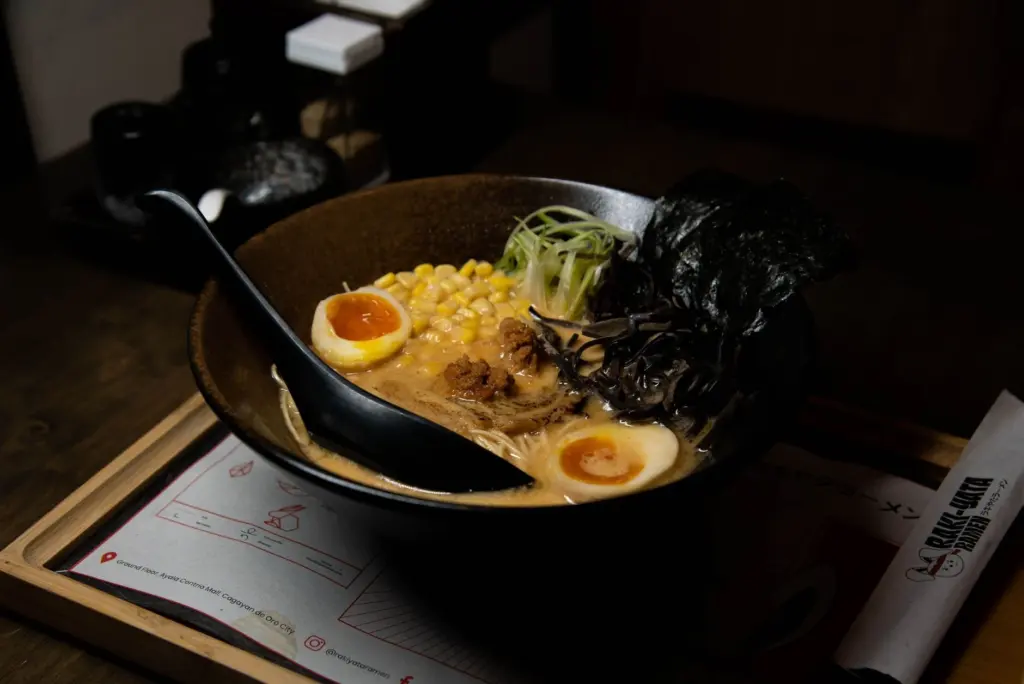
Sapporo miso ramen
Sapporo, in the north, favors miso ramen, per Eat2Explore. Hokkaido’s association with the style is the regional identity that grew up as ramen spread. If you want to see how the flavor base changes the bowl, the difference between shoyu and miso ramen is a useful next read.
Hakata tonkotsu
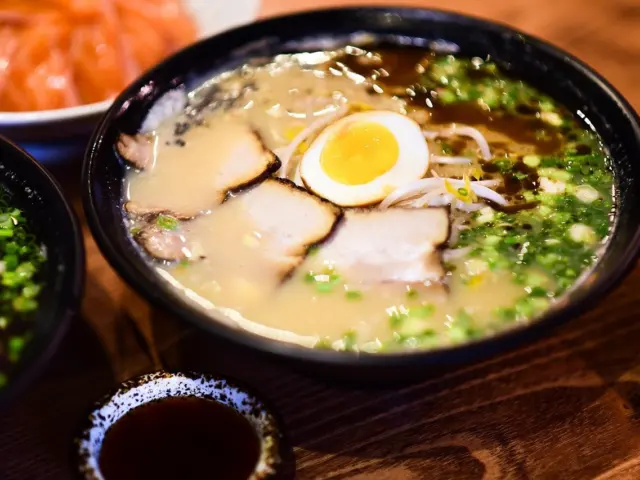
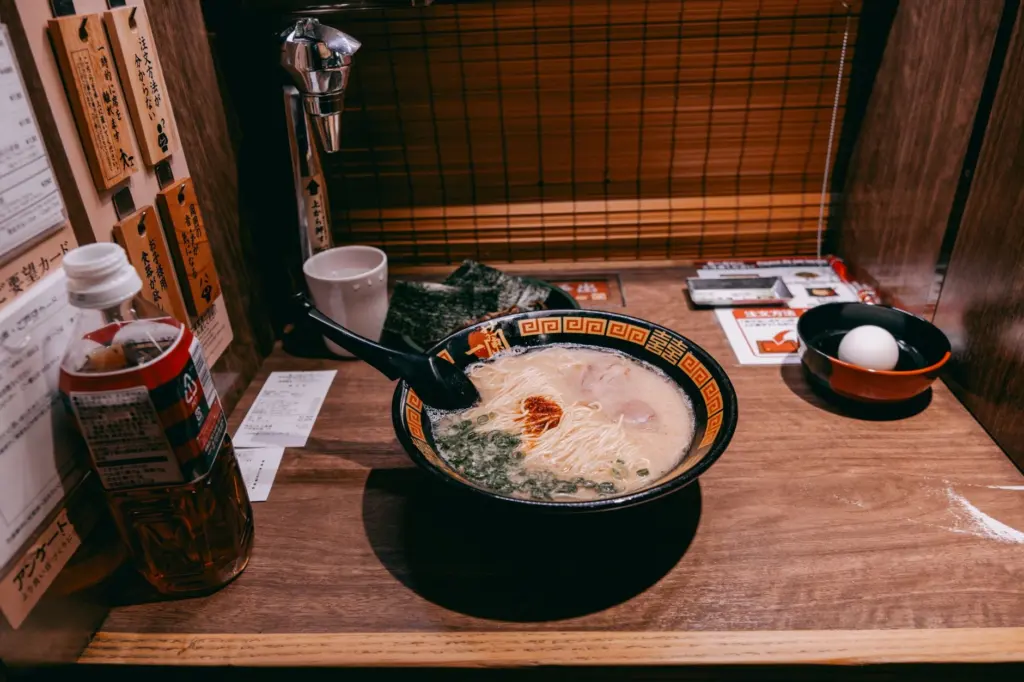
Hakata-style ramen comes from Fukuoka in southern Japan. Where many ramen broths are clear, Eat2Explore says the Hakata broth is cloudy. It is made from soy sauce and pork bones, simmered for hours. Yamato Noodle links rich tonkotsu to Kyushu, the same region, which is why Hakata is the usual reference point for the style.
Later formats
Dipping and broth-less styles came later still. Yamato Noodle names tsukemen (dipping noodles) and mazesoba (broth-less mixed noodles) as new formats. They show that the history did not end with regional broths. For the dipping style specifically, see what is tsukemen.
Frequently asked questions
| Question | Answer |
|---|---|
| Is there a museum about ramen history? | Yes. Eat2Explore says Osaka, Japan has the only museum dedicated to the history of ramen. |
| Who developed Cup Noodle, and when did it reach the US? | Momofuku Ando of Nissin Foods developed Cup Noodle, which debuted in the US market in 1973, per Myojo USA. |
| Has ramen been popular with foreign visitors? | In a 2009 survey, foreign visitors to Japan ranked ramen as the second most satisfying meal after sushi, as reported by Myojo USA. |